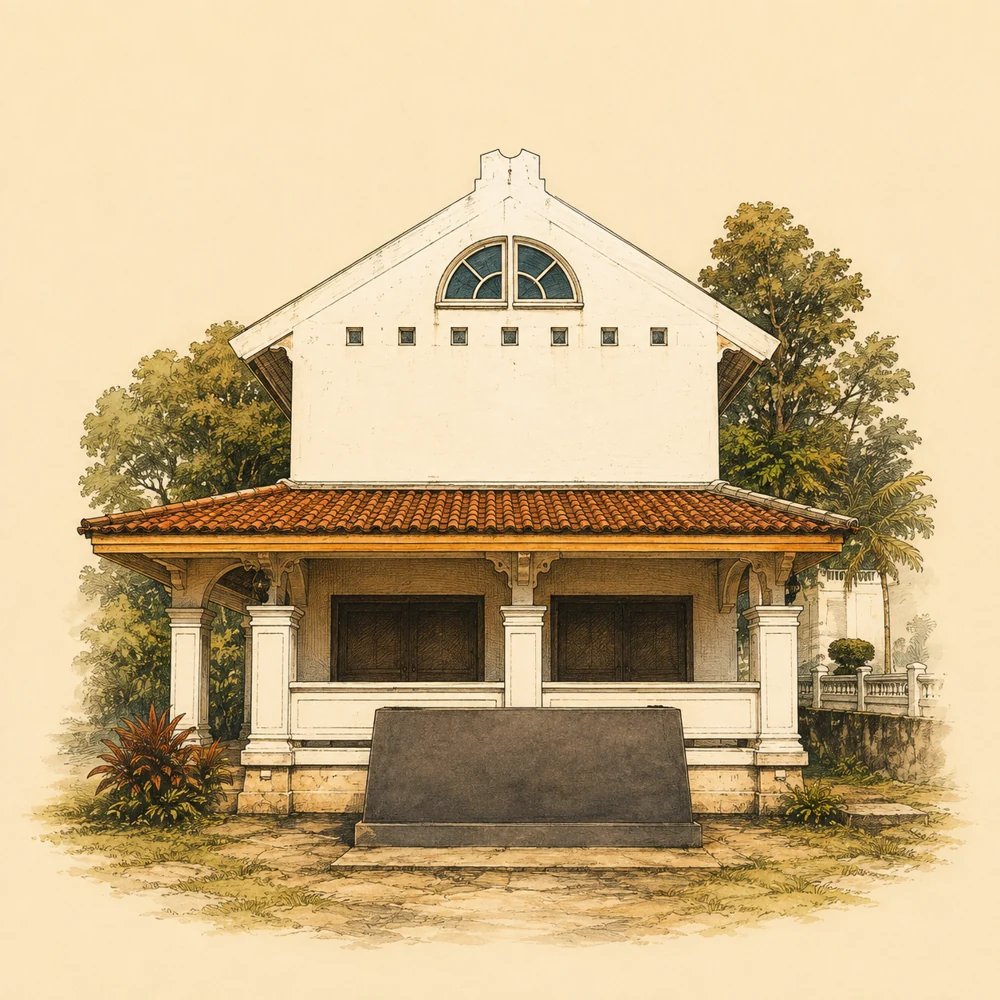
ThenWat Mai Kamphaeng in a mining and port town
Since 1847 (B.E. 2390)
VerifiedThis place began at Wat Sena Nuch Rangsan, formerly known by local residents as “Wat Mai Kamphaeng.” The temple register records its establishment in B.E. 2390 (1847), while local sources say it was built during the reign of King Rama III by Phraya Sena Nuchit (Nuch), governor of Takuapa.
At that time, Takuapa was an Andaman coastal port linking trade and tin resources. Various groups, especially workers and Chinese merchants, settled here, forming a market district and Chinese culture. The temple's Chinese-influenced ordination hall is therefore evidence of a multicultural town. For the museum seen today, no publicly available evidence identifies the year it was established or its direct founder.
BeforeFrom a temple and community to a museum of memories
No establishment year for the museum has been found; evidence shows its use in the old-town context before 2018 (B.E. 2561).
VerifiedOver time, Wat Sena Nuch Rangsan has remained a religious site and community space. Meanwhile, Takuapa changed from a centre of tin mining and trade into a historic town preserving its heritage. Academic sources describe Takuapa Community Museum as a two-storey building displaying household items, equipment, and rare objects reflecting local life, including traces of the mining era.
The temple's ordination hall is registered as an ancient monument by the Fine Arts Department, but the sources verifiable this time do not clearly state the registration year. No evidence has been found that the museum building was abandoned, underwent major restoration, or was directly affected by the 2004 tsunami (B.E. 2547), so no conclusion is made beyond the evidence.
NowA small museum on the old town route
2569 / 2026
VerifiedContemporary sources call this place both “Takuapa Community Museum” and “Takuapa House Museum.” It is presented in the context of the old-town cultural street, displaying photographs, artefacts, and community stories alongside Sino-Portuguese buildings and old temples. Its role is therefore more that of a place for learning about the town's memories than a large museum with full visitor services.
However, no official announcement has been found confirming opening hours, admission fees, the direct custodian, the building's latest condition, or a museum-specific restoration project in 2026 (B.E. 2569). Old-town and cultural-street activities continue at municipal and community levels, but this should not be interpreted as evidence that the museum opens every day.
References ·
กรมการค้าภายใน กระทรวงพาณิชย์ (Department of Internal Trade, Ministry of Commerce) Original source offline · checked 8 Sep 2026 ·
Phang Nga Province: Takuapa Old Town ·
สถานีวิทยุกระจายเสียงแห่งประเทศไทย (Radio Thailand) Original source offline · checked 8 Sep 2026