Place record · Old buildings and city traces

Khun In House

Khun In House

3 verified items

Then · Before · Now ↓

View your trip

Khun In House

Then · Before · Now

Then

The district chief's house in a tin port town

Around 1917 (B.E. 2460); tenure context: 1921 to 1926 (B.E. 2464 to 2469)

Verified

หลักฐานท้องถิ่นระบุว่าบ้านขุนอินทร์สร้างขึ้นราว 1917 (B.E. 2460) โดยช่างฝีมือชาวจีน เพื่อเป็นบ้านพักของ ร.อ.ท. ขุนอินทรคีรี (ช้อย ณ นคร) ผู้สืบสายตระกูลเจ้าเมืองและต่อมาเป็นนายอำเภอTakua Paระหว่าง 1921 (B.E. 2464) ถึง 2469 จึงไม่ใช่เพียงอาคารสวยงาม แต่เป็นบ้านของผู้มีบทบาทในโครงสร้างการปกครองเมืองช่วงปลายยุคเจ้าเมืองสู่ระบบอำเภอ

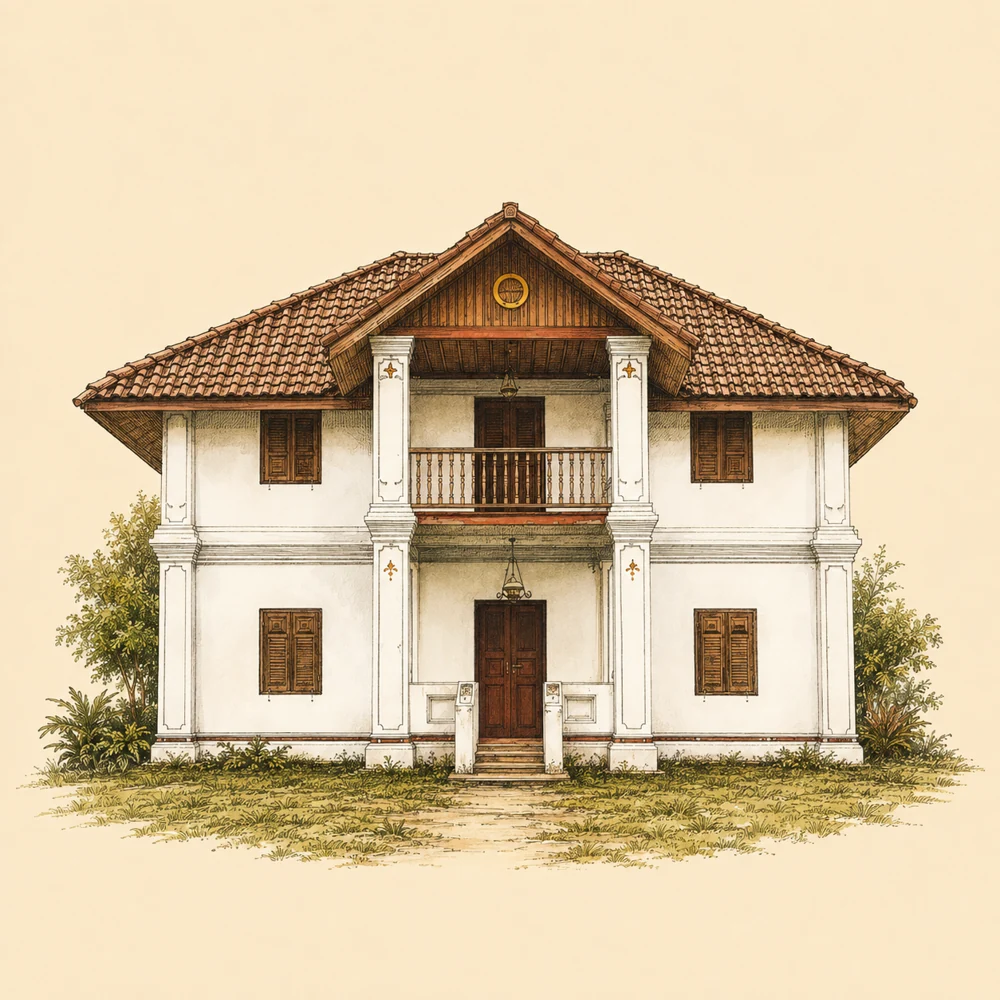
The house emerged in Takua Pa as the town grew through trade and tin mining. Rivers and canals served as transport routes, trading boats from China and Burma exchanged goods, and many Thai people of Chinese and Hokkien Chinese descent settled here. Its two-storey adapted Sino-Portuguese brick-and-mortar architecture reflects both the owner's status and the Andaman trading world that connected Takua Pa with people of many cultures.

At that time, the house served as a residence for a senior official and formed part of an old-town landscape of merchant homes, shops, and religious sites. However, no primary document has been found that directly records its construction date, the craftsmen's names, or any other public function of the house.

Before

From a family home to an old town heritage

1981 (พ.ศ. 2524) to before 2026 (พ.ศ. 2569)

Verified

After several decades of use, the building deteriorated. The Na Nakhon family repaired it around 1981 (พ.ศ. 2524), largely retaining its original form and replacing turtle-back roof tiles with corrugated tiles. Among accessible sources, this is the conservation event for Khun In House with the clearest year.

Meanwhile, Takua Pa changed from a mining and water-trade centre into a quieter town as its former economy declined. Rivers and canals became shallow due to mining activity, and the old community gradually took on a cultural and tourism role. Khun In House is therefore remembered alongside the cultural street, Chinese-European buildings, and evidence of the former mining town.

ONEP's official sources classify Khun In House as an architectural art site, while the SAC community database lists it among Takua Pa's historical sites. However, a review of accessible sources found no year confirming registration as a Fine Arts Department historic site, no record of use for another business, and no evidence that the house was damaged by the 2004 tsunami (พ.ศ. 2547).

Now

A heritage building still under family care

2569 / 2026

Verified

The status verified in 2026 (พ.ศ. 2569) is that Khun In House continues to be described as a historic building in Takua Pa old town. Local sources state that it remains under the care of the Na Nakhon family. The building's value lies in its adapted Sino-Portuguese style and its historical link to Khun Intharakhiri.

The house has no public information verifying opening hours, admission fees, an on-site caretaker, or official access to the interior. It should therefore be treated as a building that can be viewed in its external context, while interior access remains unknown. It should not be described as a museum or a regular event venue.

Today, the house has a symbolic role in the old-town landscape, alongside the cultural road and other historic community buildings. Unlike projects with clear announcements, no news or announcement from 2022 to 2026 (B.E. 2565 to 2569) has been found that identifies restoration or activities specifically for Ban Khun In.
Dot timeline

  1. Not verified

    1917 (พ.ศ. 2460)

    Construction of Khun In house

    Built around 1917 by Chinese craftsmen as the residence of Khun Intharakhiri (Choi na Nakhon).

    Read source ↗
  2. Not verified

    1921 (พ.ศ. 2464)

    Khun Intharakhiri served as district chief

    Between 1921 and 1926, the house was connected to the person holding the position of Takua Pa district chief.

    Read source ↗
  3. Not verified

    1981 (พ.ศ. 2524)

    Major repair

    The na Nakhon family repaired the building according to its original style and changed the roofing material to corrugated tiles.

    Read source ↗
  4. Verified

    10 September 2018 (พ.ศ. 2561)

    ONEP recorded it as an art and cultural site

    The ONEP database listed the Khun In building under the category of museums, architecture, and palaces, and noted the date of data modification.

    Read source ↗
  5. Not verified

    Year unspecified

    No readable evidence found regarding Fine Arts Department historical site registration

    The registration year or status with the Fine Arts Department should not be stated until official documents verify it.

    Read source ↗

No image authorized for publication yet

Highlights to see

Two-story building

Not verified

The two-story building structure is a visible element from the outside.

Read source ↗

Applied Sino-Portuguese style

Not verified

A blend of Western and Eastern art in the applied Sino-Portuguese style.

Read source ↗

Historical house of Khun Intharakhiri

Not verified

It was the residence of an important figure named in the ONEP database.

Read source ↗

Takua Pa old town context

Not verified

Located in the old town area featuring several historic buildings and cultural sites.

Read source ↗

Did you know

Verified

Khun In House is connected to Khun Intharakhiri (Choi Na Nakhon), who was a nephew of Phraya Senanuchit, the Takua Pa governor.

Read source ↗
Not verified

The original roof of the building used tiles shaped like a tortoise shell, before being replaced with corrugated tiles during the repair in 1981.

Read source ↗

Getting there

Takua Pa Town

Not verified

Located in the Takua Pa old town area, near the Mor Phithak intersection; accessible sources do not specify official routes or distances from a starting point.

Read source ↗

Phuket

Not verified

Khao Lak

Not verified

Airport

Not verified

Nearby and similar places

FAQ

What is the history of this place?

It was the residence of Captain Khun Intharakhiri (Choi Na Nakhon). Community tourism sources classify Khun In House among Takua Pa's historic sites and old buildings.

What are the highlights to see?

Its two-storey form is visible from outside. Its adapted Sino-Portuguese style blends Western and Eastern art, and it was the residence of a notable person named in the ONEP database.

How the municipality document mentions this place

A house described in documents as having Sino-European architecture and reflecting past prosperity

Data Sources

NameTypeDate accessedLink
สำนักงานนโยบายและแผนทรัพยากรธรรมชาติและสิ่งแวดล้อม (Office of Natural Resources and Environmental Policy and Planning): Khun In BuildingOfficial agency2026-09-07Open source ↗
Tourism Authority of Thailand (TAT): TAT Media AssetsOfficial agency2026-09-07Open source ↗
ศูนย์มานุษยวิทยาสิรินธร (Princess Maha Chakri Sirindhorn Anthropology Centre): Takua Pa TownOther resources2026-09-07Open source ↗
Gplace: Khun In Building, Takua Pa, Phang NgaBlog2026-09-07Open source ↗
Our Takua Pa: Tuek Khun In (Khun In Building)Blog2026-09-07Open source ↗
TAT Media Assets: Phang-nga-Khun Intra BuildingOfficial agency2026-09-07Open source ↗
Gplace: Khun In Building, Phang NgaBlog2026-09-07Open source ↗
Missing data
  • Exact opening and closing hours: Sources only indicate that the opening hours are unknown.
  • Admission fee.
  • Official phone number, Facebook page, website, and LINE account.
  • Routes and distances from Phuket, Khao Lak, and the airport.
  • Construction year and builder verified by official or academic sources.
  • The specific role of this house during the tin mining era.
  • Registration as a historical site by the Fine Arts Department.
  • Parking, restrooms, and accessibility for the elderly or wheelchairs.
  • Festivals or activities held directly at Khun In House.
  • Walking distances to nearby locations.
  • The exact date and year of construction confirmed by official documents; local sources only state around 1917.
  • The names of the craftsmen or the construction company.
  • The role of the house other than a residence, and its ownership history after the original owner.
  • Impact from the 2004 tsunami.
  • The year and registration number as a historical site by the Fine Arts Department.
  • The operational status of the interior, on-site caretakers, opening hours, admission fees, and permitted interior visits.
  • The latest structural condition and restoration or development projects in the last 5 years.
  • Past news within 5 years that directly mentions Khun In House.
  • Original image files and permission conditions from online sources.
  • Original image files and image-use permission terms from online sources